How do we build systems that earn user trust, execute tasks autonomously, and defer to human judgment when the stakes are high?
My career started at Snowbird Ski & Summer Resort, doing snow safety work and directing operations as the Chief Aerial Tram Operator. Twenty years later, the same question that drew me to mountain operations is why I show up to work today: how do people, technology, and organizations intersect when the stakes are real? That work was where I first learned the lesson I'm applying to agentic AI today: the system has to know what it should and shouldn't do, and when humans have to make a judgment call.
At Snowbird it was my responsibility to ensure that 5,000+ daily guests had the experience of a lifetime without compromising safety. In the mornings, when it had snowed overnight, we would transit to the top of the mountain in the Aerial Tram scouting out pockets of snowpack instability. We used Howitzer guns to mitigate avalanche risk in areas of high risk and high consequence safely from a distance. On those mornings before sunrise, I'd witness how the right outcome depends on humans, technology, and multiple organizations working in tandem when there is significant risk.
While working full-time at Snowbird, I was also pursuing my Honors Bachelor of Science in Business Information Systems at the University of Utah. I was drawn to how technology helps people and organizations work in harmony. After graduation, I joined Wasatch Global Investors as a Systems Administrator. There I kept our on-premises and remote data centers, workstations, and mobile devices fully operational to power multi-billion dollar portfolios. Downtime had real consequences. A missed trade meant a hit to someone's retirement account and a ransomware attack would have made the news for the wrong reasons. Similar to Snowbird, the work was about coordination across people, systems, and departments. When any single piece failed, the consequences impacted people who trusted us.
After a few years in IT, I wanted to study the intersection of humans, technology, and organizations to build better systems at scale with high impact, not just operate inside it. At the same time, my physician parents had planted a deep-rooted interest in medicine that I couldn't shake. This inspired me to obtain my EMT certification to be an effective first responder while working at Snowbird. On the side, I also helped at my dad's pain management clinic doing IT work.
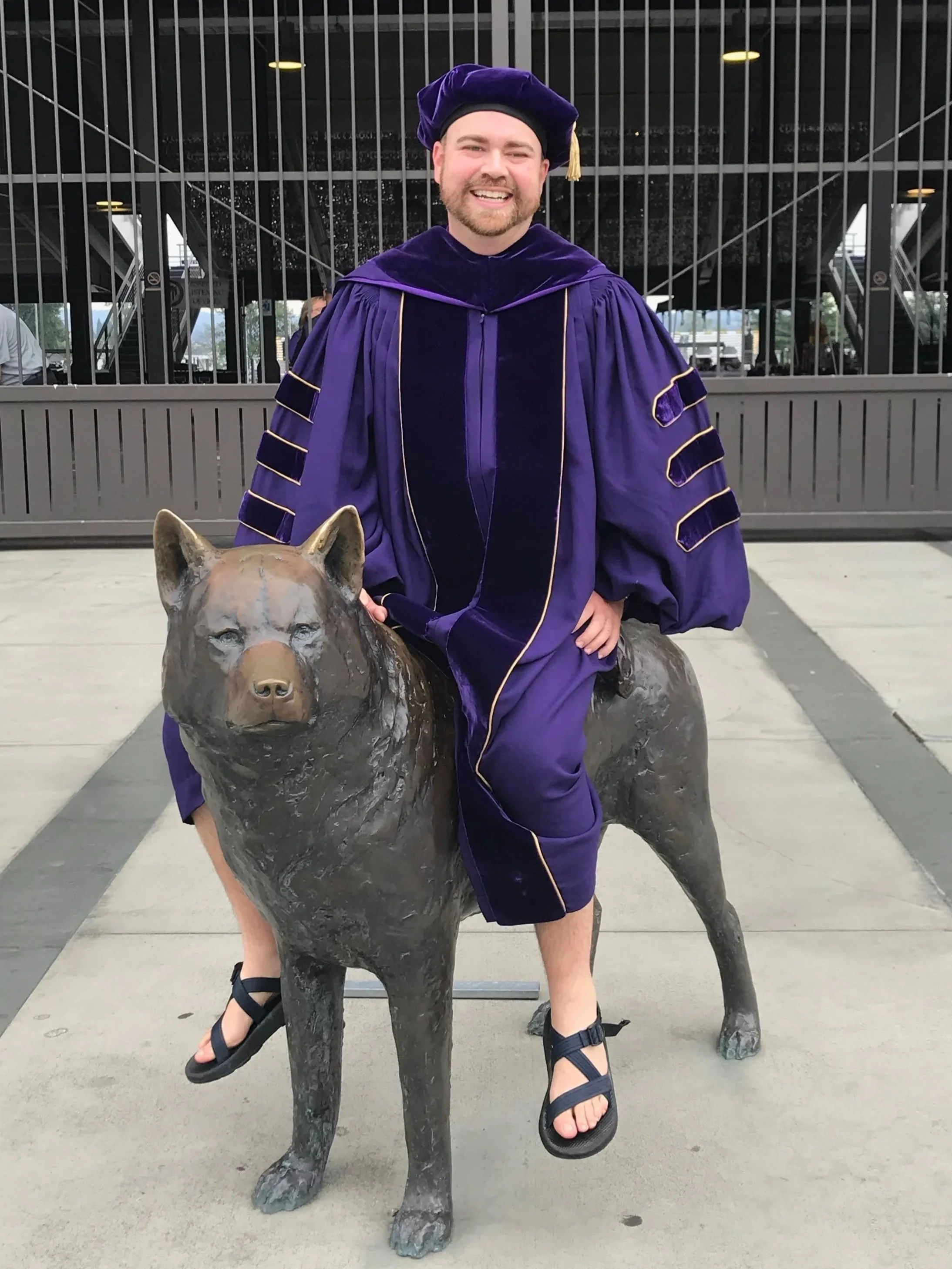
That's how I learned about the field of health informatics, which studies how to improve human health through technology. Early in my PhD program I encountered UX research, and in that moment I knew I'd found my calling. For my dissertation I designed, built, and evaluated a conversational agent, called Hernia Coach, for post-surgical patient education. A couple of years later, that work became the foundation for a CHI Best Paper, co-authored with academic and industry researchers, extending Nielsen's heuristics for conversational agents.
When I graduated with my PhD I subsequently joined Microsoft Azure. The work looked different on the surface. Azure customers were running mission critical cloud infrastructure their businesses depend upon, not patients learning about hernias. But the same fundamental research questions remained. How can you build appropriate trust in a system? When should users intervene, and when should the system act autonomously? How do you mitigate the risk of high impact consequences? These are questions I'm still exploring, especially in my agentic AI studies.
Outside of work I recharge by skiing in the Cascades, sea kayaking the Salish Sea, hiking in National Parks, cheering for the Seattle Torrent and Mariners, attempting to garden, and driving my JDM cars.
Great research generates the need for more research. Let's keep digging in. If you're working on agentic systems, human–AI interaction, or enterprise UX, please reach out.